Hiking During Fire Season
Depending on where you find yourself visiting Alaska during the summer season, you may find yourself in a bit of a haze. Not from travel or unfamiliar surroundings, but the literal haze of wildfire smoke. Alaska is known for not only its lush and vibrant forest, ocean, and various wetland ecosystems, but also for it’s high alpine areas that are much more arid. Additionally, sprawling meadows can become dry during drought times and are susceptible to lightning strikes, which are one way a fire can start, the other being a human-caused factor.
If you have found yourself with a plan to go hiking, and also some smoky haze in the air, some planning adjustments and considerations will need to be made. You may have to do some creative problem solving, although, it is important to respect area closures due to fire danger and risk. Typically, wherever you are, you can check with the information center to see daily and seasonal closings.


Precautions, Risks, and Being Prepared
Often, large or even small fires can happen thousands or hundreds of miles away, and as soon as firm wind shifts, so can the density of smoke in the air. This information is NOT to advise or encourage anyone to seek out dangerous routes close to actively growing fires. Use this material to build skills to address air quality issues that arise with smoke in the air. And, be aware of the dangers and risks that exist during wildfire season.
If you find yourself hiking in areas with smoke in the air, there are a few things to consider:
- Check the Air Quality Index before going outdoors.
- Use a mask. If there is a considerable amount of particles in the air from smoke, specifically use an N95 mask. Inhaling air particles from the smoke can especially affect people with conditions like asthma and heart disease.
- Bring extra water with you. Being able to keep your throat and nose region hydrated continuously will help to prevent irritation and give time for the body to cope with any irritation. Try to bring double your regular water intake with you.
- Take more breaks than usual. These breaks give your body time to rest and recover.
Check out this day hiking checklist for what you will need to be prepared for a day hike in Alaska.
Navigating and Visibility
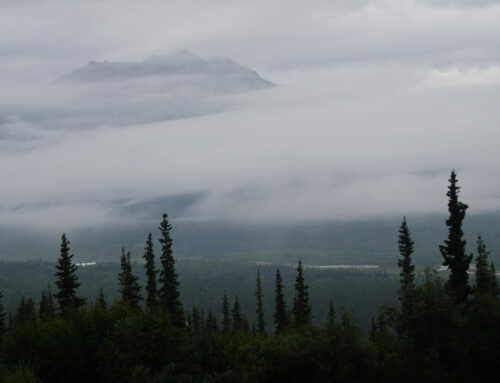
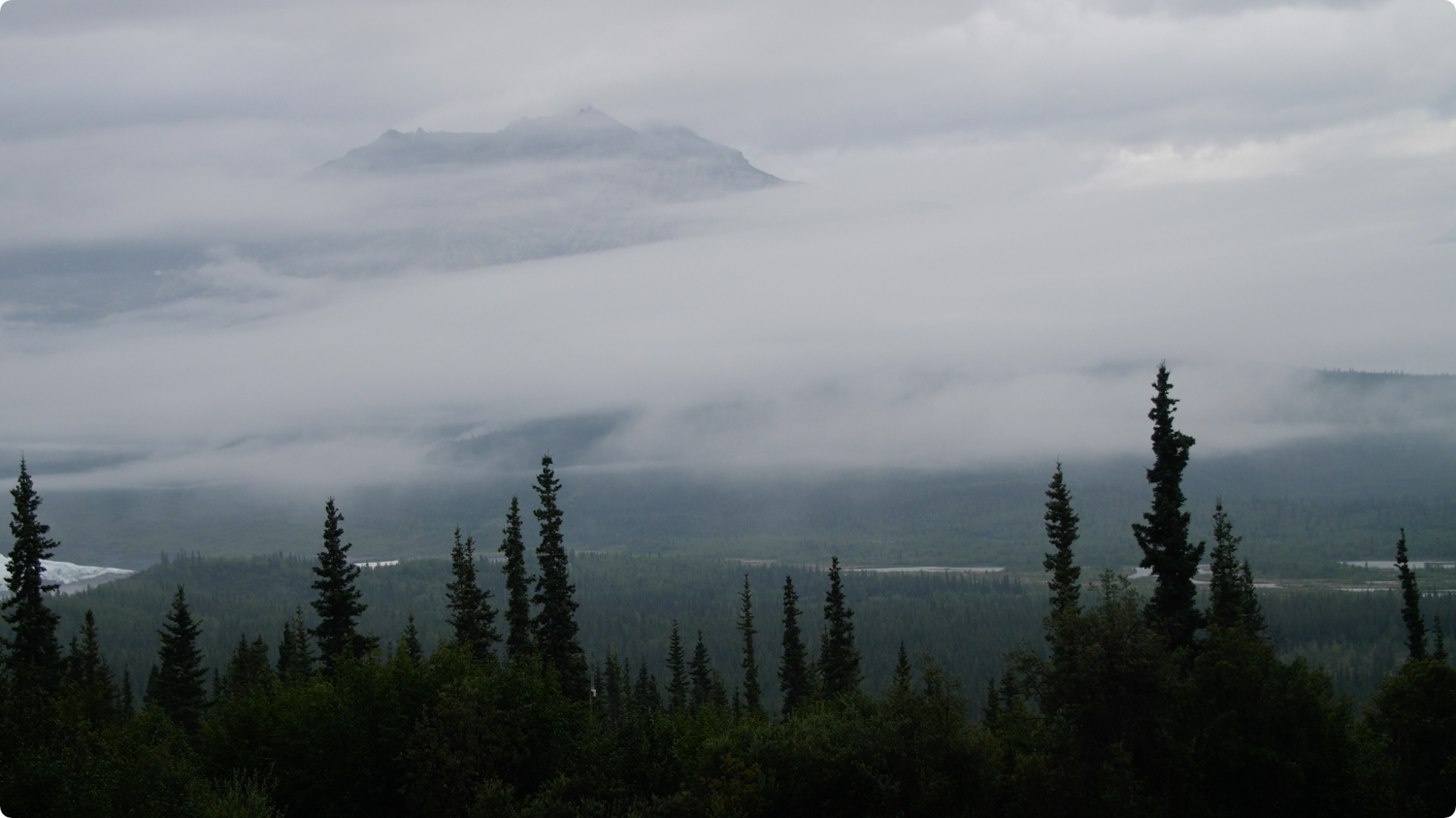
Wildfire smoke in the air means reduced visibility. Having a physical copy of a map, as well as a GPS option, is recommended. In addition, taking more time to note landmarks will be helpful. And since smoke rises from the heat, staying low will help you to stay out of the smoke. Unless the winds and atmospheric pressures are changing, which do tend to happen in the afternoons in Alaska during the summertime.
Being familiar with the terrain will provide better support for route finding. If you’re lucky, you may even have some rain. The rain droplets absorb the smoke particles and offer a fresher atmosphere. Hopefully, this is more of a guide for if there is smoke from a far-off fire that the wind has shifted over. And just in case it needs to be said, if for some reason you do see flames rising in the distance, head in the opposite direction. Want more information on active fires in Alaska? Check out this map.